

With the rise of smart factories, the era of traditional manufacturing is over. Artificial intelligence robots equipped with computer vision, machine learning algorithms, edge computing, and sensing capabilities are reshaping production processes. From automated quality control and predictive maintenance to real-time monitoring and optimization, these intelligent systems improve efficiency, reduce costs, and accelerate time-to-market. Collaborative robots are redefining the relationship between humans and machines on the factory floor.
Core Concepts of Robotics and Automation
The Magic of Robotics
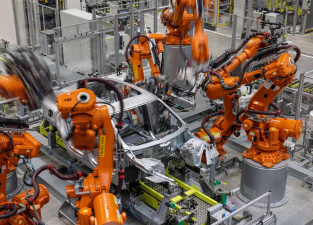
Imagine a robotic arm effortlessly and precisely assembling car parts in a busy factory, its efficiency and accuracy astounding. This is the magic of robotics—robots exhibit high efficiency and precision in factories, learning and adapting to their environment through sensors and intelligent control systems. Like meticulously trained mechanics, they can even learn and adapt to environmental changes with the help of sensors and intelligent control systems.
The Scope of Automation Technology
Automation technology, like a behind-the-scenes operator, uses software and control techniques to enable machinery to automatically perform tedious or potentially dangerous tasks. Automation technology encompasses a wide range of fields, extending far beyond robotics to include transportation, finance, and many others. These tasks can range from simple assembly line operations to complex intelligent system control. Robots play a key role in automation systems, but the scope of automation technology extends far beyond robotics, permeating all aspects of our lives, including smart homes, traffic control systems, and financial transactions.
Applications of Robots
In today's society, robotics technology is widely used in various fields. They not only appear on factory production lines for high-precision, high-efficiency parts assembly but also deeply integrate into our daily lives.
Applications in Industrial Production
Robots have brought significant efficiency improvements to industrial production, particularly in the astonishing application of robots in automobile manufacturing.
The History of Automation Technology
Looking back, you'll find that robots actually have a "long" history—their origins can be traced back to the Industrial Revolution of the early 20th century. During that period, early mechanized production lines freed factory workers from heavy manual labor. However, the true "robot" was born in 1961. That year, George Devol innovatively designed the first industrial robot, "Unimate," which was introduced into the automotive manufacturing industry, thus opening a new chapter in the application of robots in industry. Since the beginning of mechanized production in the early 20th century, automation technology has gradually developed, reaching intelligence and flexibility in the 21st century. With the rapid development of computer technology in the 1980s and 1990s, robots have gradually demonstrated higher intelligence and flexibility. They can not only perform tasks such as welding, painting, and handling, but also begin to learn how to adapt to different working environments and needs. In the 21st century, the rise of artificial intelligence has made robots "increasingly intelligent"—they possess the ability to autonomously perceive their environment, make decisions, and even "think."
Challenges Faced
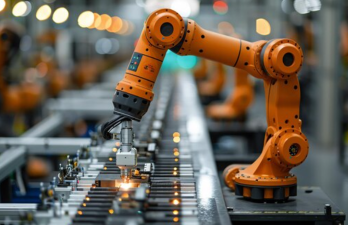
However, the rapid development in this field has also brought many challenges. Rapid development brings employment transformation issues and ethical and legal challenges that need to be properly addressed. On the one hand, the widespread adoption of automation technology may lead to the gradual replacement of some traditional jobs, thereby triggering a transformation in the social employment structure. On the other hand, as robots' autonomous decision-making capabilities continue to improve, ethical and legal issues are gradually emerging, such as attribution of responsibility and privacy protection. These issues require our collective consideration and the search for appropriate solutions.
Conclusion
Smart factories, collaborative robots, AI-driven quality control, predictive maintenance, and workforce restructuring are just the beginning. Manufacturing is rapidly evolving, offering unprecedented opportunities for increased productivity, cost savings, and innovation. Embracing these advancements and leveraging the power of AI and robotics will be key to staying ahead in the digital manufacturing era.